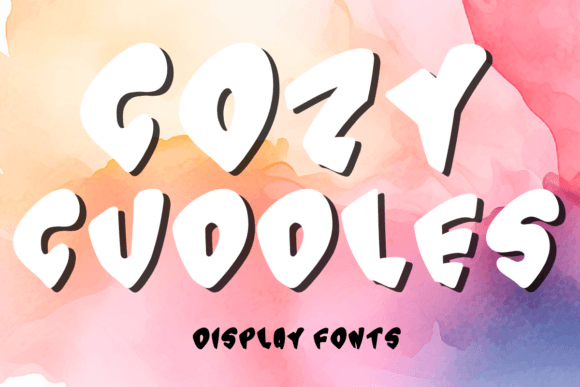
Cozy Cuddles: A Display Font That Brings Warmth to Web Design
When you are building a digital experience, every pixel communicates something. The typeface you choose for headlines, hero sections, and call-to-action buttons is often the first element a visitor registers. It sets the emotional tone before a single word is read. Cozy Cuddles is a display font that delivers exactly that: a sense of warmth, comfort, and approachability right from the first glance. As a web designer who works daily with landing pages, app screens, and brand-focused websites, I have found that this typeface fills a specific gap in the modern typography landscape—it is soft without being childish, decorative without losing readability, and distinctive enough to anchor a brand identity.
Understanding the Visual Personality of Cozy Cuddles
Cozy Cuddles belongs to the display category, which means it is purpose-built for larger sizes and shorter text blocks. It is not a body copy workhorse; it is a voice. The font includes a complete set of 26 capital letters and numerals 0 through 9, giving you everything you need for headlines, short phrases, logos, and accent typography. The letterforms carry a rounded, hand-drawn quality that feels organic and lived-in. There is a gentle irregularity to the strokes that mimics the warmth of a handwritten note, yet the characters remain clean enough for digital screens.
In my own projects, I have used Cozy Cuddles for hero headlines on coaching websites, welcome banners for online stores, and title treatments for digital course pages. The font’s personality works especially well when you want to communicate softness, safety, or a personal touch—think mental health apps, baby product brands, subscription boxes for self-care, or boutique hospitality sites. The contrast between the rounded curves and the slight unevenness of the caps creates a rhythm that feels both crafted and casual.
Where Cozy Cuddles Performs Best in Digital Layouts
Because Cozy Cuddles is a display font, its natural habitat is in places where you need a visual anchor. Here are the specific areas where I have found it to be most effective:
- Hero sections and above-the-fold headlines – The font’s warmth immediately differentiates your site from the cold, corporate look of many sans serif defaults. A single headline set in Cozy Cuddles can make a visitor feel welcomed rather than sold to.
- Call-to-action buttons and badges – Short phrases like “Get Started,” “Join the Club,” or “Your Cozy Corner” gain a tactile, friendly quality. The rounded caps fill the button space nicely without feeling cramped.
- Section headings and subheads – When paired with a neutral body font, Cozy Cuddles creates clear visual hierarchy. It signals “this is a new section” without relying on heavy borders or background colors.
- Logo text and brand lockups – For small businesses, solopreneurs, and creative studios, this font can serve as a standalone logotype. The capital letters have enough character to be memorable, and the set includes all the letters you need for a custom wordmark.
- Online shop banners and promotional graphics – Seasonal sales, new arrivals, and limited-edition drops benefit from the font’s approachable vibe. It works well on top of soft gradients or photographic backgrounds with light overlays.
- Blog headers and social media graphics – Digital content creators often struggle to maintain a consistent visual tone. Using Cozy Cuddles across blog headers, Instagram story titles, and Pinterest pins builds a recognizable brand shorthand.
Readability, Hierarchy, and User Engagement
One of the first questions I get from fellow designers is whether a decorative display font can still support good readability. The answer with Cozy Cuddles is yes, provided you follow a few practical guidelines. Because the font is all caps and has a hand-drawn finish, it works best at sizes of 24 pixels and above for web use. At those sizes, the letterforms remain distinct, and the spacing between characters is generous enough to prevent crowding.
For visual hierarchy, I recommend using Cozy Cuddles at the top level—typically your H1 or H2 tags—and then pairing it with a neutral sans serif font for body copy, navigation, and smaller text. This creates a clear contrast: the warm, rounded display type draws the eye, while the clean sans serif carries the information load. The result is a layout that scans quickly and feels intentional. Users tend to slow down slightly when they encounter a unique headline face, which can increase time on page and engagement with your core message.
On mobile screens, the font holds up well as long as you avoid using it for long phrases. Keep headlines to five or six words maximum. In responsive designs, I often reduce the size of Cozy Cuddles by about 20 percent on small screens while maintaining its role as the primary visual hook. If you are using it on a dark background, ensure the contrast ratio is high enough—white or light pastel text on a dark gray or navy background works beautifully. On light backgrounds, a deep charcoal or warm brown gives the font enough weight to stand out.
Practical Examples for Real Web Projects
Let me walk through a few scenarios where Cozy Cuddles has made a measurable difference in my own design work.
Creative portfolio site – A freelance illustrator wanted a homepage that felt personal and inviting. I used Cozy Cuddles for the hero phrase “Welcome to My Studio” and for the section titles “Work,” “About,” and “Contact.” The font’s handmade quality echoed the illustrator’s drawing style. I paired it with Inter, a clean sans serif, for the project descriptions and navigation. The combination felt coherent and warm without being cutesy.
Boutique online store – A shop selling artisan candles and home goods needed a brand refresh. The product pages used Cozy Cuddles in the collection headers (“Forest Collection,” “Citrus Brights”) and in the add-to-cart button text. The font’s rounded caps softened the e-commerce experience, making it feel more like a curated boutique than a generic storefront. The client reported a noticeable increase in add-to-cart rates after the redesign, which I attribute partly to the trust signaled by the refined, approachable typography.
Course sales page – For a life coach launching a program on stress management, the landing page used Cozy Cuddles for the main headline “Find Your Calm” and for the testimonial pull quotes. The font’s warmth directly supported the course’s value proposition. Paired with a lightweight serif font for the body text, the page felt educational but not clinical. Conversion rates stayed strong because the visual tone matched the emotional promise of the offer.
Font Pairing Strategies for Cozy Cuddles
Because Cozy Cuddles has a strong personality, your choice of companion typeface matters. Here are pairings I have tested in live projects:
- With a clean sans serif font – Fonts like Open Sans, Lato, or Nunito provide a neutral counterpoint. The sans serif handles body copy, captions, and small UI text while Cozy Cuddles takes the spotlight in headlines. This is the safest and most versatile pairing for most digital products.
- With a simple serif font – For a more editorial or refined brand identity, pair Cozy Cuddles with a serif like Merriweather or Crimson Text. The serif’s structure adds a touch of authority, while Cozy Cuddles keeps the overall tone friendly. This works well for coaching sites, online magazines, and premium blogs.
- With a handwritten font – If you are building a brand that leans heavily into artisanal or handmade values, you can pair Cozy Cuddles with a more casual script or handwritten font for secondary accents. Be careful not to overload the page with too many decorative faces; use the handwritten font sparingly for pull quotes or decorative labels.
When pairing, keep the hierarchy clear. Cozy Cuddles should always be the dominant voice in headers and key phrases. The companion font should recede into the background, supporting readability without competing for attention.
File Formats, Webfont Use, and Licensing Considerations
When you download Cozy Cuddles, you will want to check the included file formats. Most premium font packs include OTF, TTF, and WOFF or WOFF2 variants. For web use, WOFF2 is the preferred format because it offers the smallest file size and fastest load times. If you are using Cozy Cuddles on a live website, upload the webfont files to your server and reference them via @font-face in your stylesheet. Alternatively, if the font is available through a hosted service like Google Fonts or Adobe Fonts, you can load it directly from their CDN.
For commercial projects—including client websites, online stores, landing pages, digital templates, and brand assets—you must purchase the appropriate commercial license. Using a personal or trial license on a revenue-generating site violates the terms of use and can lead to legal issues. Always read the license agreement carefully. Some licenses cover a single domain, while others allow use across multiple sites or in client work. If you are a designer creating assets for multiple clients, look for a license that specifically allows for commercial redistribution or extended use.
I also recommend checking whether Cozy Cuddles includes any stylistic alternates or ligatures. Some display fonts offer alternate glyphs that give you more flexibility in logo design or headline treatments. If alternates are available, you can use them to avoid duplicate letterforms in short wordmarks, making the typography feel even more bespoke.
Supporting Consistent Brand Identity Across Digital Touchpoints
A brand identity is only as strong as its consistency. Cozy Cuddles can serve as a reliable anchor across your entire digital ecosystem. Use it on your website, email headers, social media templates, presentation decks, and digital ads. When the same font appears in multiple contexts, it builds recognition and trust. Users begin to associate the warm, rounded letterforms with the feeling your brand delivers.
For digital ads, Cozy Cuddles works well in static banner ads and social media graphics where the headline is the primary visual element. Keep the text short—three to five words—and let the font’s personality do the heavy lifting. On landing pages, use the font in the hero section and then echo it in the button text or a testimonial quote to reinforce the visual thread. The consistency pays off in higher engagement and a more polished overall impression.
If you are designing a digital brand kit, include Cozy Cuddles as the primary headline font and specify a fallback font for systems that do not support custom webfonts. A good fallback might be a system font like Arial or Helvetica rounded, but the best results will always come from the actual font files. By defining the font’s usage rules—minimum size, color palette, and allowed contexts—you ensure that the brand remains cohesive across every screen.
Cozy Cuddles is not a font you use everywhere. It is a font you use intentionally. When you reserve it for the moments that matter most—the first impression, the key message, the emotional hook—it rewards you with a digital presence that feels genuinely warm and memorable. For any web designer or digital creator looking to move beyond the predictable and into the personal, Cozy Cuddles offers a reliable, beautiful way to do exactly that.